New Application: Zero Hour Alerts by Cotiviti
Goal: Produce a best in class design for a product that would be the retail industry’s first true platform that gave retailers advance warning needed to monitor, prioritize, and proactively resolve payment accuracy issues.
Role: Product Designer Manager
Case Study Summary:
In partnership with senior stakeholders across business, engineering, UX, external vendors, and Cotiviti’s brand and marketing teams, we delivered a best-in-class prevention and alerts product to address a $575 million (24‑month rolling) post-pay recovery audit exposure for Cotiviti’s retail clients.
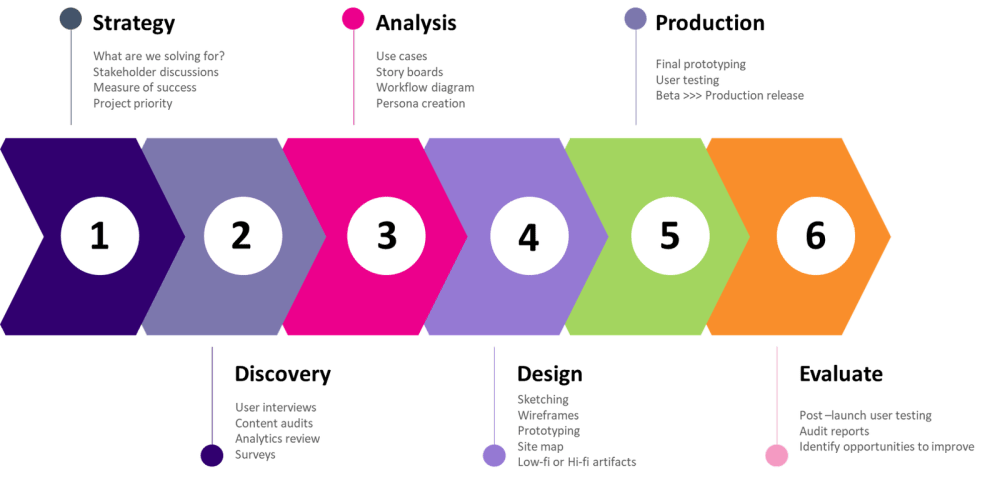
My UX team, collaborating with an external design firm, applied our UX methodology to identify the most critical user touchpoints and interactions, ensuring the product was highly usable and purpose-built for the teams relying on it.
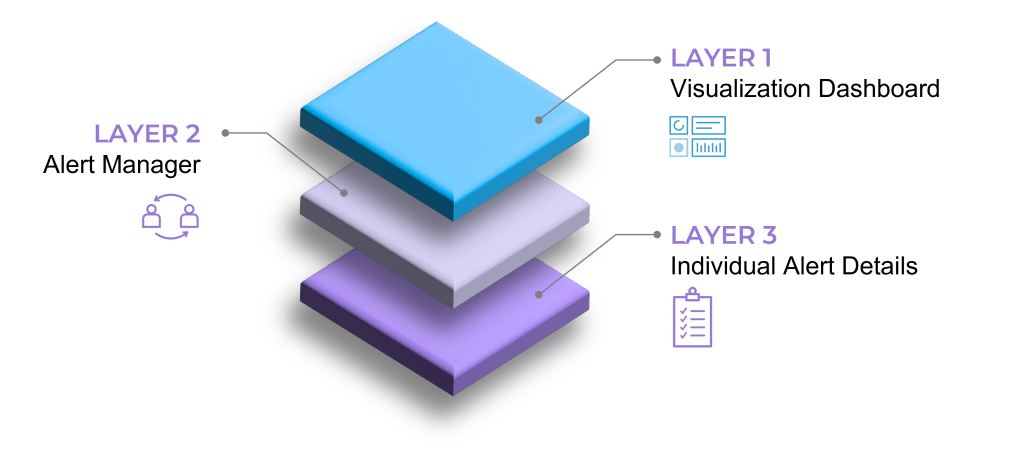
The web-based Zero Hour Alerts software platform consists of essentially three layers: a visualization dashboard, alert manager, and an alert detail layer. All of which have their own UX visuals designed with a user-first approach.
My vision and oversight focused on creating a product that broke from traditional Cotiviti design, offering a modern, edgy interface that users would naturally be drawn to. At the same time, I aimed to balance bold visual design with robust functionality to deliver a best-in-class experience for everyone interacting with the application, which ultimately led to the creation of the ZHA dashboard. Users gain significant flexibility through rich filtering options, allowing them to refine information by alert value, alert type, vendor, department, confidence score, and aging.
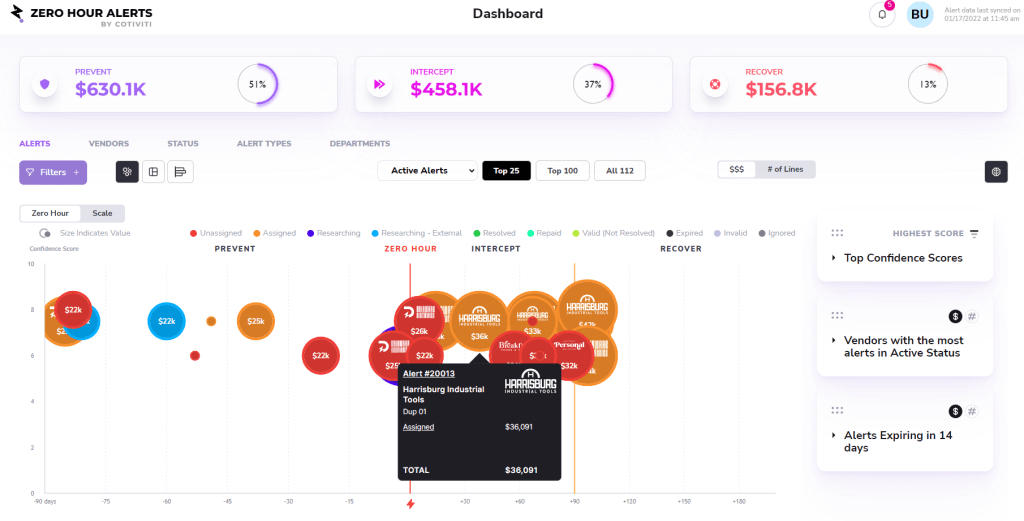
The alerts dashboard visualizations prioritize high-value errors, issues closest to transactions, and events with strategic third-party suppliers, enabling internal teams to focus resources on the most impactful challenges. Merchandise and finance teams leverage these alerts to drive prevention efforts without compromising productivity.
For one of the ten largest U.S. retailers, this solution generated $23M in annual average value through alerts, accounting for over 25% of audit recoveries in the first year alone.
 James Bowman, CUA